
"planted in"
50000 article(s) found
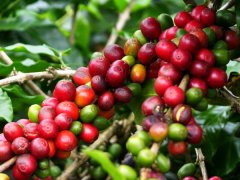
Which countries and regions can grow coffee? Why?
Since coffee trees are tropical plants, they need to be planted in warm places. The main planting area is distributed between latitude 25 south and latitude 25 north with the equator as the center, so this area is also called the coffee belt. However, even in the coffee belt, Arabica and Robeska do not grow in exactly the same area, but grow up in an environment that is more suitable for their own growth.

Which countries and regions can grow coffee? Why?
Since coffee trees are tropical plants, they need to be planted in warm places. The main planting area is distributed between latitude 25 south and latitude 25 north with the equator as the center, so this area is also called the coffee belt. However, even in the coffee belt, Arabica and Robeska do not grow in exactly the same area, but grow up in an environment that is more suitable for their own growth.

Lujiatu Rungeto Farmers' Cooperative Giando Kiangoi processing Plant in Chirijaga, Kenya
Professional baristas please follow the Coffee Workshop (Wechat official account cafe_style) Giando processing Plant is a member of Rungeto Farmers' Cooperative, located in the southern foothills of Mount Kenya, the city of Chirijaga in the central province. Lujiatu has three processing plants, including the oldest, Kii and Karimikui, which were founded in 1965.

Introduction to the processing Plant of Burundian Coffee Bean planting Environment and Flavor description
Burundi has the most diverse and successful coffee industry in the world, and has its own characteristics. Coffee in this country was introduced by Belgian colonists in 1930 and is now grown only on small farms. Unfortunately, many of these farms are on the border with war-torn Rwanda, putting pressure on coffee production. Coffee produced in Burundi.

Kenya coffee Kenya New Ngariama cooperative Kamwangi processing plant introduction.
Professional coffee knowledge exchange more coffee bean information please follow the coffee workshop (Wechat official account cafe_style) Kamwangi processing plant (washing plant) is one of the two processing plants under the "New Ngariama Co-operative", located in the Kirinyaga region of Central Kenya. Kirinyaga is located on the hillside of Mount Kenya, near Nieri, with a strong, rich and tasty taste.

Guma Village / Guma treatment Plant, Qilin Yaga Town, Kenya, TOP AB grade water washed bean flavor and mouth
Professional coffee knowledge exchange more coffee bean information please follow the coffee workshop (Wechat official account cafe_style) Kilin Yajia Town, Kenya Guma Village / Guma processing Plant TOP AB grade waterwashed bean flavor and taste characteristics? September 2017 Coffee Review 95 batches our factory PB batches, November 2016 coffee review 97 points, 2016 coffee revie

What is the altitude above which coffee beans are planted?-Coffee bean planting conditions
Coffee beans are planted above sea level-coffee bean planting conditions the origin of coffee trees is Ethiopia in Africa. In botany, coffee trees belong to the evergreen trees of the subgenus Rubiaceae, and coffee beans, commonly known as coffee beans, are the seeds of the fruit of coffee trees, just because they are shaped like beans, so they are called coffee beans. Climate is the decisive factor in coffee cultivation.

What kind of environment is most suitable for planting coffee trees?
The planting conditions of coffee trees, however, not all the land located in this area can produce good coffee trees. The ideal planting conditions of coffee trees are as follows: the temperature is between 15 ℃ and 25 ℃, and the annual rainfall must reach 1500 mm to 2000 mm. At the same time, the rainfall time should be in line with the flowering cycle of coffee trees. Of course, except for the matching of seasons and rainfall

The growth process of coffee trees planting boutique coffee
First, planting time: April 15-25 period. Second, planting location: plain, hillside, wasteland, front and back house, forest and fruit tree seedlings can be planted, but should not be planted in tall trees or other unventilated places. Third, herbal coffee does not like flood and fertilizer, conditional planting can use farm manure, during the growth period, it is best to irrigate 1-2 water during the growth period, absolutely do not allow the use of all kinds of chemical fertilizers and

Introduction to the award-winning flavor of sun-tanned coffee in Fairview Manor, Tangmeo processing Plant, Costa Rica
Professional barista exchanges please follow the coffee workshop (Wechat official account cafe_style) Product name: Costa Rica Tangmeo processing Plant Fairview Manor Sun treatment (Costa Rica Don Mayo Finca Bella Vista Natural) Flavor description: flowers, orange fruit notes, cocoa, roasted walnut aroma, lively sweet and sour, syrup smooth 2017

Xizang's coffee, are you looking forward to it?
Xizang can grow not only highland barley potatoes. As early as two years ago, various tropical fruits such as banana, lemon, pomelo, papaya, sugarcane, mango, citrus and jackfruit were successfully grown in Motuo County, Linzhi City, Xishuangbanna. Growing coffee in Linzhi corner under the same climatic conditions may become a reality in the near future. The first trial of coffee has been completed.

Yunnan small grain coffee Yunnan coffee beans
Yunnan coffee was planted on a large scale in the mid-1950s, with a planting scale of 4000 hectares at one time. By the end of 1997, the planting area of coffee in the province had reached 7800 hectares. At present, the planting area of the province accounts for 70% of the national area, and the output accounts for 83% of the whole country. Yunnan coffee has established the dominant position in China in terms of planting area and coffee bean production. The west and south of Yunnan Province
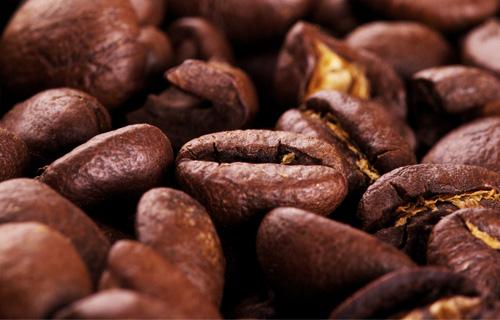
Katim Coffee characteristics, Katim Coffee planting
Follow Kaiping (Wechat official account vdailycom) found that the beautiful cafe opened its own shop with 3846 seeds per kilogram when it was cool in the sun for two months. There were about 5000 seeds in cool sun for 5 months, the germination rate was more than 95% in two months after seed production, 85% in three months, became weak after three months, and most seeds lost their germination rate after six months. Resistance to leaf rust

Introduction of coffee beans from Katuji processing Plant of Ausaya Cooperative in Kenya. How to drink Kenyan AB Coffee
Professional coffee knowledge exchange more coffee bean information please follow the coffee workshop (Wechat official account cafe_style) 2018 new season Kenya Ausaya Cooperative Katuji processing Plant exquisite washing pure SL coffee producing area. Othaya Cooperative, Nyeri Country, Kenya processing plant. Gatugi Station altitude. 1864 M beans. SL2
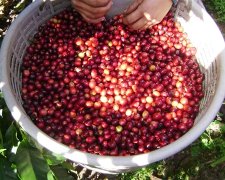
History of planting and treatment of Wamuguma in Thika Wamgumar treatment Plant, Sika District, Kenya
For the exchange of professional baristas, please follow the coffee workshop (Wechat official account cafe_style) the history of planting and processing of Kenyan coffee. The history of Kenyan coffee can be traced back to the end of the 19th world. Coffee tree species were introduced from neighboring Ethiopia in the north. After improvement of their own varieties, there are four common varieties: Bourbon and Kents.
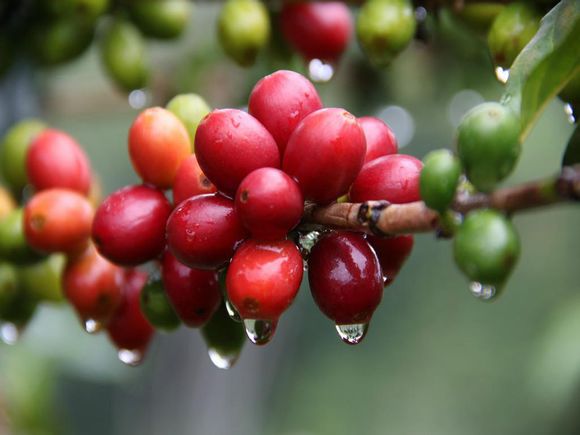
Coffee bean seed price how much coffee bean planting coffee bean price seed coffee raw bean sun plus snow
Coffee seeds cannot be grown directly with coffee fruits picked from coffee trees. Peeling coffee fruits is like planting peanuts. If you plant a peanut with a shell in the soil, it cannot sprout. You must plant peanuts. It is the same with medium coffee. If you have coffee fruit in your hand, you can first bask it in the sun and shake it until it is shaken inside.

What is the planting environment and taste characteristics of Red Bourbon in the Ash Mountain treatment Plant of Rwanda?
Professional coffee knowledge exchange more coffee bean information please pay attention to the growing environment and taste characteristics of Red Bourbon in Coffee Workshop (Wechat official account cafe_style) Ash Mountain processing Plant in Rwanda. Flavor: grapefruit, milk chocolate, raisin agronomist's gray mountain project Huye Mountain The Barn has been in this gray mountain for the first time since 2013 (Huye Moun
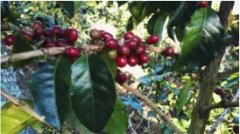
A hybrid between Arabica and Robusta [Catimor] Katimo and its branches
The exchange of professional baristas please pay attention to the coffee workshop (Wechat official account cafe_style) the interspecific hybrid between Arabica and Robusta [Catimor] the hybrid between Katimo Caturra and Timor. It was discovered in Portugal in 1959. The palate is obvious and easy to distinguish, the bitter acid is a little astringent, the aftertaste is often salty, and there is low acidity in Robusta in the Timo family.

Costa Rican Coffee Costa Rica Microprocessing Plant.
Professional coffee knowledge exchange more coffee bean information Please follow the coffee workshop (Wechat official account cafe_style) microprocessing plant revolution before 2000, because the long-term downturn in the price of coffee beans in international trade prompted Costa Rican farmers to build their own processing plants, that is, the country's favorite "microprocessing plant revolution", Manuel Ant, operator of Herbazu.

The first large-scale coffee planting base appeared in Guangdong
According to the China News Service, the trial planting of coffee trees in Guangdong was successful in Zhenan Town, Yunan County, Yunfu City.